Introduction
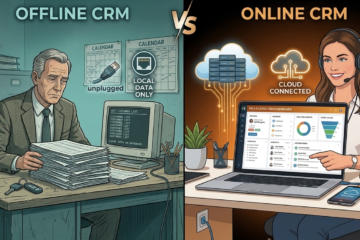
For decades, sales teams relied on spreadsheets, notebooks, emails, and manual follow-ups to manage customer relationships. These tools served their purpose in an era of limited customer data and relatively straightforward sales processes. But business has changed dramatically. Today’s organizations operate in an environment where customers expect faster responses, personalized engagement, and seamless experiences across every touchpoint. In this new reality, manual sales management is no longer just inefficient – it is a competitive disadvantage. Sustainable growth now depends on real-time visibility, intelligent automation, and the ability to make data-driven decisions at every stage of the sales cycle. Today’s customers expect instant responses, personalized interactions, and seamless experiences across every touchpoint. Meeting these expectations through manual processes is no longer practical, as it often results in delays, inconsistencies, and missed opportunities. This is why businesses are turning to Sales CRM solutions. A Sales CRM helps organizations manage leads, track customer interactions, automate follow-ups, and gain valuable sales insights – all from a centralized platform.
The result is a more organized, productive, and growth-focused sales operation.
The Limitations of Traditional Sales Methods
Traditional sales management often relies on:
- Excel spreadsheets
- Manual record keeping
- Personal notes
- Email folders
- Phone call logs
While familiar, these methods create several challenges, as follows:
Missed Follow-Ups
Without automated reminders, sales opportunities can easily be forgotten.
Data Scattered Across Multiple Sources
Customer information often exists in emails, spreadsheets, notebooks, and individual employee records.
Limited Visibility
Managers struggle to track sales activities and monitor team performance.
Inefficient Collaboration
Team members may lack access to the latest customer information, leading to communication gaps.
As businesses grow, these limitations become more costly.
How Sales CRM Delivers Better Results
Centralized Lead Management
A Sales CRM stores all lead and customer information in one place.
Benefits:
- Easy access to customer data
- Better organization
- Improved team collaboration
Sales teams no longer waste time searching for information across multiple systems.
Automated Follow-Ups
Consistent follow-up is critical to sales success.
Sales CRM systems automatically remind users about:
- Calls
- Meetings
- Customer follow-ups
- Pending opportunities
Benefits:
- Fewer missed opportunities
- Improved lead nurturing
- Higher conversion rates
Complete Sales Pipeline Visibility
A CRM provides a clear view of every opportunity in the sales process.
Benefits:
- Better forecasting
- Improved decision-making
- Faster identification of bottlenecks
Managers gain real-time visibility into pipeline health and team performance.
Faster Lead Response
In sales, speed matters.
CRM systems instantly notify teams when new leads arrive.
Benefits:
- Quicker engagement
- Better customer experience
- Increased chances of conversion
Businesses can respond before competitors do.
Improved Customer Relationships
A CRM maintains a complete history of customer interactions.
Sales representatives can view:
- Previous conversations
- Follow-up activities
- Customer preferences
- Purchase history
Benefits:
- Personalized communication
- Stronger customer relationships
- Improved customer retention
Data-Driven Decision Making
Unlike traditional methods, CRM systems generate actionable insights.
Businesses can track:
- Conversion rates
- Sales performance
- Lead sources
- Follow-up effectiveness
Benefits:
- Smarter business decisions
- Better sales strategies
- Improved resource allocation
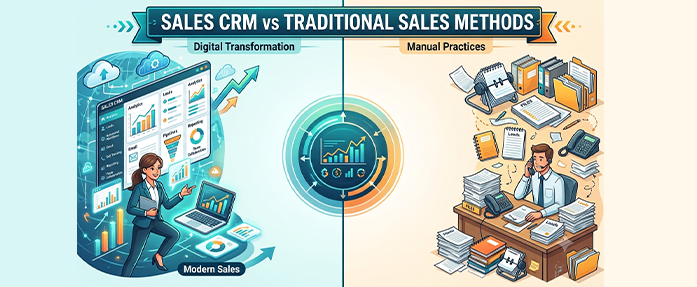
Sales CRM vs Traditional Sales Methods
| Traditional Methods | Sales CRM |
| Manual data entry | Automated tracking |
| Spreadsheets and notebooks | Centralized database |
| Missed follow-ups | Automated reminders |
| Limited visibility | Real-time reporting |
| Scattered customer data | Complete customer history |
| Difficult collaboration | Shared team access |
| Reactive sales approach | Proactive sales management |
The difference is not simply about technology – it’s about creating a more efficient and scalable sales process.
Why Modern Businesses Need CRM
As businesses grow, sales complexity increases.
Organizations must manage:
- More leads
- Larger customer databases
- Multiple communication channels
- Distributed sales teams
Traditional methods often become difficult to maintain at scale.
A Sales CRM provides the structure and automation needed to manage growth without sacrificing customer experience or operational efficiency.
How HelloLeads CRM Helps Businesses Sell Smarter
HelloLeads CRM is designed to help businesses move beyond manual sales processes and achieve better results.
Lead Capture and Management
Organize leads from multiple sources in a single platform.
Automated Follow-Up Reminders
Ensure every prospect receives timely attention.
Mobile CRM Access
Manage leads, customers, and sales activities from anywhere.

Sales Pipeline Tracking
Monitor opportunity progress and prioritize important deals.
Team Collaboration
Assign leads, track activities, and improve accountability.
Performance Analytics
Measure conversion rates, uncover sales bottlenecks, and identify new growth opportunities with actionable insights. By combining intelligent automation, end-to-end lead tracking, and centralized customer management, HelloLeads empowers businesses to streamline their sales processes, boost team productivity, improve conversion rates, and accelerate sustainable revenue growth.
Conclusion
Traditional sales methods may be sufficient for small businesses with limited customers and straightforward sales processes. However, as organizations grow, these manual approaches quickly become inefficient and difficult to scale. Critical customer information gets scattered across spreadsheets, emails, and personal notes, follow-ups are missed, collaboration becomes fragmented, and managers lack the visibility needed to make informed decisions.
A Sales CRM addresses these challenges by bringing every customer interaction into a single, centralized platform. It automates routine tasks, ensures timely follow-ups, streamlines team collaboration, and provides real-time insights into sales performance. Instead of spending time managing data, sales teams can focus on building relationships and closing more deals.
Organizations that embrace CRM technology gain a powerful competitive advantage. They respond faster to customers, improve sales productivity, make better data-driven decisions, and build stronger customer relationships – ultimately driving higher conversions, sustainable revenue growth, and long-term business success.