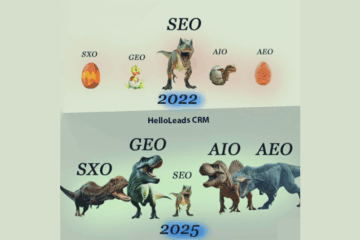
The way businesses approach search optimization is undergoing a radical transformation. Traditional SEO, built on keywords, backlinks, and rankings is no longer enough. Generative AI tools like ChatGPT, Gemini, and Perplexity are now reshaping how users discover content. Enter Generative Engine Optimization (GEO): a forward-looking strategy that aligns your content with AI-driven discovery, ensuring your brand is recognized, referenced, and cited in AI-generated answers.
The Beginning of GEO
GEO emerged as AI-powered systems began synthesizing content instead of merely indexing web pages. As early AI chatbots and generative tools evaluated context rather than strict rankings, businesses realized that even high-ranking pages were not always selected in AI answers. GEO evolved as a framework to optimize content for AI comprehension, ensuring visibility in conversational search, voice assistants, and AI summaries.
GEO Strategy: Quick Insights
At its core, GEO is about making content understandable, trustworthy, and referenceable by AI engines. Unlike SEO, which prioritizes rankings, GEO prioritizes:
- Context: Comprehensive answers aligned with user intent
- Authority: Credible, well-structured, fact-driven content
- Structured Data: Schema markup that helps AI parse information
- Integration: Knowledge graphs and API-linked data networks
GEO ensures your content is not just found but used by AI models to generate responses.
Generative AI Chatbot Logic & Algorithms

Generative models like ChatGPT or Gemini use natural language understanding(NLU) to synthesize answers from multiple sources. These models evaluate content based on:
- Relevance: How closely content aligns with the query
- Authority: Signals like structured data, references, and credible authorship
- Clarity: Easily parsable content with semantic context
Understanding these algorithms helps businesses structure content for higher inclusion in AI responses. For example, content with FAQs, bullet points, and schema markup is more likely to be cited in AI-generated summaries.
GEO Strategy: Key Recommendations
To maximize visibility in AI-driven search, businesses should:
- Develop AI-friendly content with context-rich answers
- Implement schema markup and structured data across all pages
- Integrate knowledge graphs linking your brand to authoritative networks
- Monitor AI response outputs to identify content gaps
- Optimize content for conversational search and voice queries
These strategies ensure your brand is recognized and cited in AI responses, rather than just ranking on traditional search pages.
Steps to Implement a GEO Strategy in Your Business
Implementing GEO requires both technical precision and strategic foresight:
- Audit existing content: Identify pages that lack context, structured data, or authority signals
- Restructure content: Rewrite and format content for AI comprehension, using headings, bullet points, and concise language
- Apply schema markup: Use JSON-LD for FAQs, products, services, and author credentials
- Integrate knowledge graphs: Connect your business and content to structured networks to boost AI recognition
- Track results: Use AI-specific analytics to monitor inclusion in AI-generated summaries and conversational search outputs
For example, a digital agency that implemented GEO by combining structured content, FAQs, and AI-friendly formatting saw a 25% increase in brand mentions and referral traffic from AI platforms within weeks.

How HelloLeads.io Supports GEO
At HelloLeads.io, we use structured data, optimized content workflows, and AI-friendly lead management practices to prepare our business for GEO. These implementations help ensure our content remains authoritative, traceable, and discoverable in AI-driven search ecosystems.
Conclusion
Generative Engine Optimization isn’t a replacement for traditional SEO, it is its natural evolution. As AI models increasingly shape how information is discovered, brands must focus on making content understandable, authoritative, and referenceable by AI systems. By embracing structured data, context-rich content, and AI-friendly formatting and by leveraging platforms like HelloLeads.io businesses can secure visibility, trust, and growth in an AI-first search landscape.
Share this blog :