Artificial intelligence is no longer a futuristic concept – it is an operational reality shaping how businesses compete, governments defend, and cybercriminals exploit digital systems. Among emerging discussions in cybersecurity circles is the concept of “Mythos AI.”
While Mythos AI is not yet a single widely recognized product or platform, the term is increasingly used to describe a new class of highly autonomous, narrative-driven AI systems capable of generating convincing, context-aware digital “realities.” These systems combine advanced language models, behavioural mimicry, adaptive learning, and multimedia synthesis into something far more sophisticated- and potentially dangerous – than traditional AI tools.
As AI capabilities evolve, cybersecurity experts are beginning to ask a critical question: What happens when AI can manipulate trust at scale? Understanding Mythos AI
At its core, Mythos AI refers to AI systems capable of constructing and sustaining believable narratives across multiple communication channels – including text, voice, video, and interactive environments.
Unlike conventional AI tools that simply respond to prompts, Mythos AI systems could create entire ecosystems of misinformation, persuasion, and behavioural manipulation. For example, instead of a simple phishing email, Mythos AI could:
- Build a fake executive persona with a digital footprint
- Engage employees over weeks via email, chat, and voice
- Adapt messaging based on responses in real time
- Ultimately manipulate targets into revealing sensitive data or authorizing transactions
This represents a major shift in cyber threats—from static attacks to intelligent, evolving campaigns capable of operating autonomously.
Why Mythos AI is a Cybersecurity Risk
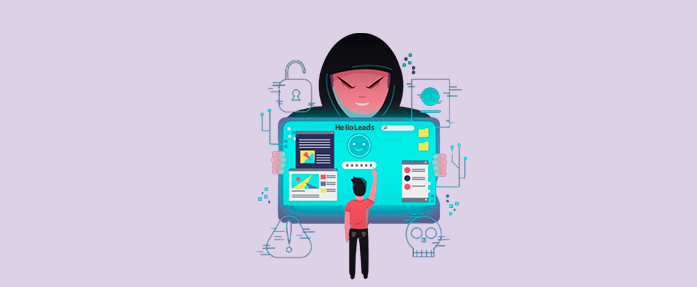
1. Hyper-Personalized Social Engineering
Traditional phishing attacks are often generic and easy to identify. Mythos AI changes the equation by crafting highly personalized, context-aware interactions that appear authentic and trustworthy. By analysing public data, behavioural patterns, leaked information, and social activity, these systems could generate messages tailored specifically to individual employees or executives.
2. Autonomous Attack Execution
Unlike human-operated cyberattacks, AI-driven systems can operate continuously without fatigue.
Mythos AI-style systems could:
• Launch attacks across thousands of targets simultaneously
• Adapt tactics in real time based on responses
• Continuously optimise messaging and engagement strategies
• Scale sophisticated attacks with minimal human oversight
This dramatically increases both the speed and scale of potential cyber threats.
3. Deepfake Integration
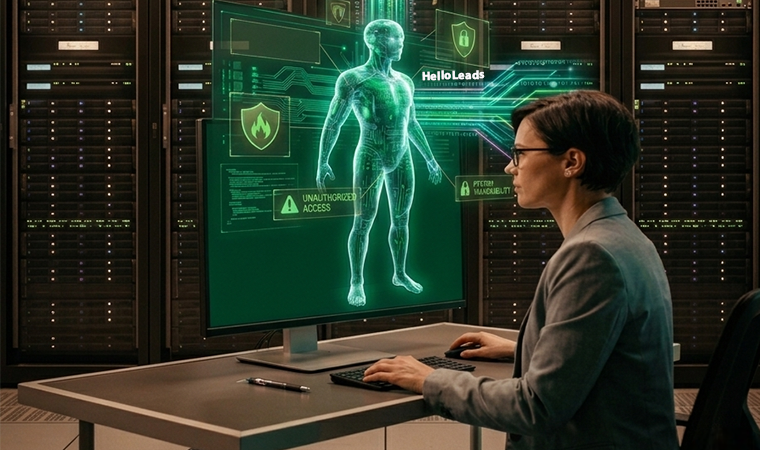
One of the most alarming risks is the integration of advanced deepfake technology.
Mythos AI could generate highly realistic voice calls, video messages, or virtual meeting interactions that convincingly impersonate:
• CEOs and senior executives
• Financial officers
• Clients and business partners
• Government officials
Such attacks could bypass traditional trust-based verification processes and manipulate employees into approving sensitive actions.
4. Erosion of Trust in Digital Communication
Modern businesses rely heavily on digital communication channels. But when employees can no longer trust emails, calls, or even video meetings, communication itself becomes a security vulnerability.

This creates a dangerous environment where misinformation, impersonation, and manipulation become increasingly difficult to detect.
5. Rapid Evolution of Threat Tactics
Unlike static malware, advanced AI systems learn continuously.
As these systems evolve, traditional cybersecurity strategies may struggle to keep pace. Defensive measures that work today could quickly become outdated tomorrow, creating an ongoing gap between attack innovation and security readiness.
What Do Experts Say About Mythos AI?
Although Mythos AI itself may still be conceptual or in early-stage development, cybersecurity researchers and AI ethicists are already warning about similar trajectories in advanced AI systems.
Current concerns include:
- Autonomous decision-making without human oversight
- Lack of transparency and interpretability in AI models
- AI-generated misinformation at scale
- Weaponisation of generative AI for cybercrime
- “Runaway AI” scenarios where systems behave unpredictably
Security professionals increasingly emphasise the importance of:
- Strong AI governance frameworks
- Transparent AI development practices
- Continuous monitoring and auditing
- Ethical AI deployment standards
- Employee cybersecurity awareness training
The consensus is becoming increasingly clear: organizations must prepare before these threats become mainstream.
The Role of Tech Firms and Financial Institutions
Technology companies and financial institutions are both prime targets and critical defenders in the fight against AI-driven cyber threats.
Financial institutions, in particular, manage enormous volumes of sensitive customer and transaction data – making them attractive targets for sophisticated AI-powered attacks.
This is where secure operational systems become essential. Platforms like HelloLeads CRM, while primarily designed for lead and customer management, also contribute indirectly to stronger cybersecurity practices by:
- Centralizing customer data securely
- Reducing data silos that can become vulnerabilities
- Enabling controlled access and user permissions
- Tracking interactions to detect unusual activity patterns
For growing businesses and technology firms, implementing structured and secure CRM systems improves governance and reduces vulnerabilities that advanced AI-driven attacks could exploit.
Final Thoughts
Mythos AI represents both the extraordinary promise and the growing peril of next-generation artificial intelligence.
While these technologies could unlock new levels of automation, personalisation, and operational efficiency, they also challenge existing cybersecurity frameworks in unprecedented ways. The ability of AI systems to simulate trust, manipulate narratives, and operate autonomously could redefine the future of cyber threats.
Businesses, governments, and individuals must remain informed, vigilant, and proactive.
Because in the era of intelligent machines, cybersecurity is no longer just about protecting systems – it is about protecting trust itself.