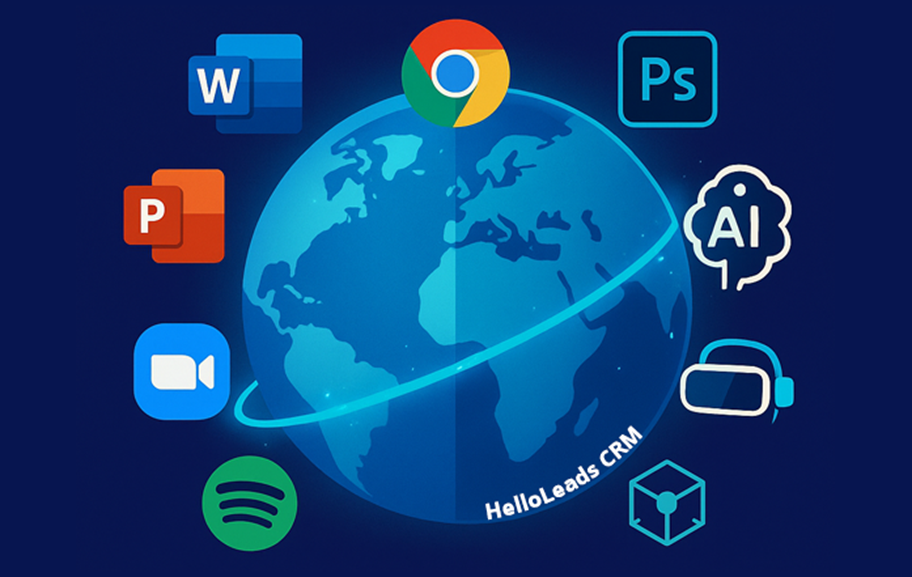
From the moment we wake up and check our phones to the time we unwind with music or movies, software surrounds us at every step. It powers the apps we rely on, the work we do, the entertainment we enjoy, and even the rockets exploring space. In just a few decades, software has evolved from a niche tool for programmers into the invisible force driving modern life.
In this blog, we’ll look at some of the most influential software tools, uncovering surprising statistics and facts that show how they’ve transformed the world—and what’s next on the horizon.
1. Microsoft Office: The Ultimate Productivity Suite
Microsoft Office is arguably the most widely recognized and widely used software suite in the world. With Word, Excel, PowerPoint, and Outlook, it powers everything from personal projects to global business operations. The suite is so deeply embedded in our daily lives that it’s nearly impossible to imagine working without it.
Eye-Opening Stats and Facts:
- Over 1.2 billion active users: Microsoft Office has one of the largest user bases worldwide.
- Excel, the powerhouse: Used by 750M+ people, Excel offers 400+ functions, some advanced enough to rival specialized data tools.
- Word, the writer’s companion: More than 30M documents are created daily in Word, making it a go-to platform for reports, research, and creative writing.
2. Adobe Photoshop: The Industry Standard for Graphic Design
Launched in 1987, Photoshop completely redefined digital imaging and remains the gold standard in design, art, and photography. What began as a simple editor is integral to industries like advertising, media, and entertainment.
Eye-Opening Stats and Facts:
- 15M+ subscribers: Photoshop, via Adobe Creative Cloud, is used worldwide by both professionals and hobbyists.
- New-age careers: It helped create professions like digital artists, influencers, and social media marketers.
- Visual culture impact: Nearly 90% of media images have been edited or enhanced using Photoshop, influencing how the world sees visuals.
3. Google Chrome: The Browser That Changed Everything
Since its release in 2008, Chrome has become the world’s most dominant browser, thanks to its lightning-fast speed, minimalist design, and seamless integrations.
Eye-Opening Stats and Facts:
- 65% market share: As of 2024, Chrome leads the browser market globally.
- 200,000+ extensions: From productivity to gaming, extensions make Chrome highly customizable for every user.
- Seamless Google ecosystem: Its tight integration with Gmail, Drive, and YouTube keeps billions of users connected and engaged within the Google universe.
4. Slack: Revolutionizing Workplace Communication
Slack modernized workplace communication with its chat-first, integration-rich approach, making collaboration smoother than ever.
Eye-Opening Stats and Facts:
- 18M+ daily active users: Adopted by giants like IBM, Target, and Airbnb.
- 2M+ channels worldwide: Organized team spaces that reduce cluttered email threads and improve workflow.
- Productivity boost: Helps businesses save up to 32 hours per employee per month by streamlining conversations.
5. Zoom: The New Normal for Video Conferencing
During the pandemic, Zoom evolved from an underdog into the primary platform for virtual meetings, connecting work, education, and personal interactions seamlessly.
Eye-Opening Stats and Facts:
- 300M daily participants (2020 peak): A symbol of remote work and virtual classrooms.
- 50%+ global market share: Still a leader in online meetings as of 2024.
- Constant innovation: Features like AI transcription, virtual backgrounds, and real-time translation keep it ahead of competitors.
6. Spotify: Redefining the Music Industry
Spotify disrupted how we consume music, shifting from downloads and CDs to on-demand streaming, and transforming listener habits worldwide.
Eye-Opening Stats and Facts:
- 500M+ users, including 200M premium subscribers.
- 80M+ tracks available: Growing daily, powered by AI-driven recommendations.
- Sustainable revenue model: Effectively balances advertising and subscriptions, reshaping the economics of the music industry.
7. Autodesk AutoCAD: Shaping the Future of Design
For architects, engineers, and designers, AutoCAD has been a cornerstone tool for decades, enabling precise design and drafting that shapes skylines, products, and infrastructure worldwide.
Eye-Opening Stats and Facts:
- 10M+ professionals rely on AutoCAD for design and drafting.
- Sub-millimeter accuracy makes it vital in engineering and construction.
- Expanding portfolio: Autodesk also leads in 3D modeling, animation, and simulation, broadening its impact across creative and technical industries.
8. GitHub: Empowering Developers to Collaborate
GitHub is the central hub for the global software development community, enabling developers to collaborate seamlessly, share code, and innovate at unprecedented speed.
Eye-Opening Stats and Facts:
- 83M+ developers use GitHub worldwide.
- 200M+ repositories: Home to major open-source projects like Linux, Kubernetes, and TensorFlow.
- GitHub Actions: Automates development workflows, accelerating innovation.
What’s Next: The Future of Software
While these tools showcase how software has shaped our present, the future promises even more transformative innovations. Here are a few trends that hint at what’s coming next:
- AI Everywhere: Tools like ChatGPT, GitHub Copilot, and AI-driven design apps are making creativity and productivity smarter and faster.
- Low-Code & No-Code: Software creation is no longer limited to developers—anyone can build apps and workflows with drag-and-drop platforms.
- Immersive Tech: Augmented reality (AR), virtual reality (VR), and mixed reality are poised to redefine design, education, and entertainment.
- Decentralized & Secure Systems: Blockchain and Web3 promise more transparent, user-controlled ecosystems.
- Quantum Computing: Still in its early stages, quantum-powered software has the potential to revolutionize problem-solving in fields like science, finance, and medicine.
Conclusion: The Ubiquity of Software and Its Unseen Power
From Microsoft Office to GitHub, the tools we’ve explored represent just a fraction of the vast digital universe shaping industries, governments, and everyday life. Whether you’re designing skyscrapers, editing photos, streaming music, or joining a virtual meeting, software is the invisible engine powering it all.
As the next wave—AI, immersive technologies, Web3, and more—takes shape, one thing is clear: we’ve only just begun to unlock software’s full potential. The world has already been transformed—but the true revolution is still ahead.