
In business, time is money—and this is especially true when it comes to closing deals. Small businesses often face a tough choice: close quickly to secure customers before competitors step in, or take extra time to negotiate better terms—at the risk of losing the deal. Finding the right balance is key, as both speed and caution come with their own advantages and drawbacks.
Closing deals quickly
Closing deals quickly shows customers that you’re proactive, attentive, and eager to do business. Often, customers compare multiple vendors, and if you delay too long, you risk losing them to a faster competitor. Acting swiftly offers key benefits such as:
- Build trust and credibility – Customers feel valued when you respond promptly and don’t keep them waiting.
- Stay ahead of competitors – Presenting a clear, attractive offer quickly often seals the deal before others step in.
- Boost cash flow – Faster deals lead to quicker payments, which is vital for small businesses that depend on steady revenue.
- Create positive momentum – Every quick win energizes your team and builds confidence for future deals.
That said, moving too fast without proper checks can also backfire. For example, you may underquote just to win the deal or agree to unrealistic timelines that later strain your operations. Quick closures are powerful, but they work best when backed by preparation and clarity.
Longer wait and risks
On the flip side, patience brings its own advantages. Taking time to evaluate a deal allows you to:
- Understand the true needs of customer – Taking time to listen and explore helps you uncover deeper requirements, leading to better solutions and long-term satisfaction.
- Negotiate better terms – Whether it’s pricing, timelines, or scope of work, waiting a little can give you more room for discussion
- Avoid costly mistakes – A commitment without checking feasibility might hurt profits or damage your reputation
The challenge is that competitors won’t wait while you decide. If a competitor is faster and offers a reasonably good package, the customer may sign with them before you even make your move. For small businesses, one lost deal means losing referrals, repeat business, and market credibility.
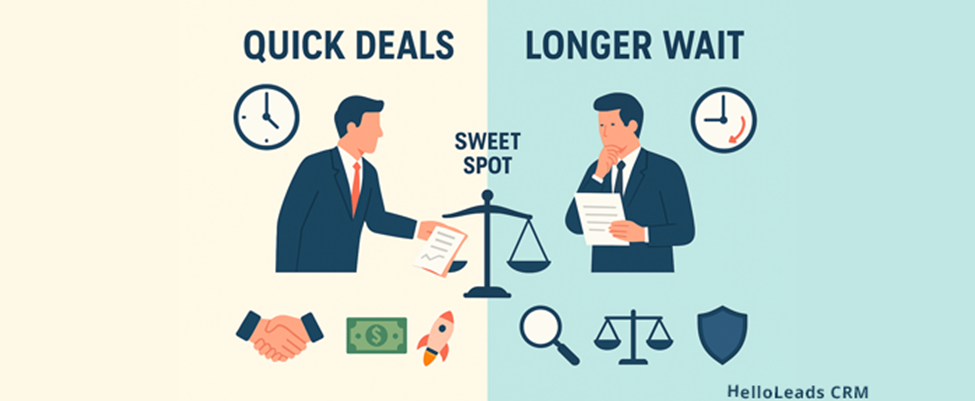
Striking the Right Balance
The best approach to deal customers is to combine speed with smart decision-making. You don’t have to choose between rushing and delaying—you can do both strategically. Here’s how:
- Have your offers ready – Standard packages, service outlines, and FAQs help you respond fast without reinventing the wheel.
- Leverage digital tools – CRM systems like HelloLeads CRM, proposal templates, and automated follow-ups can speed up your sales process while keeping things professional
- Set clear boundaries – Decide in advance what terms you compromise on, so you can proceed faster without putting your business at risk
- Train your team – Everyone involved in sales should know how to respond promptly, qualify leads quickly, and close with confidence
When you’re prepared, you can engage with customers swiftly while still ensuring the deal is beneficial and sustainable. For small businesses, every deal is a chance to grow. Closing a deal quickly helps to stay ahead of competitors, while thoughtful evaluation ensures you don’t lock yourself into unfavourable commitments. The sweet spot lies in being fast but not careless. Respond quickly, show value, and close with confidence—but never forget to protect your long-term interests. After all, the real goal isn’t just to close deals faster—it’s to build lasting customer relationships that keep bringing business back.